

World Cup Group F Predictions
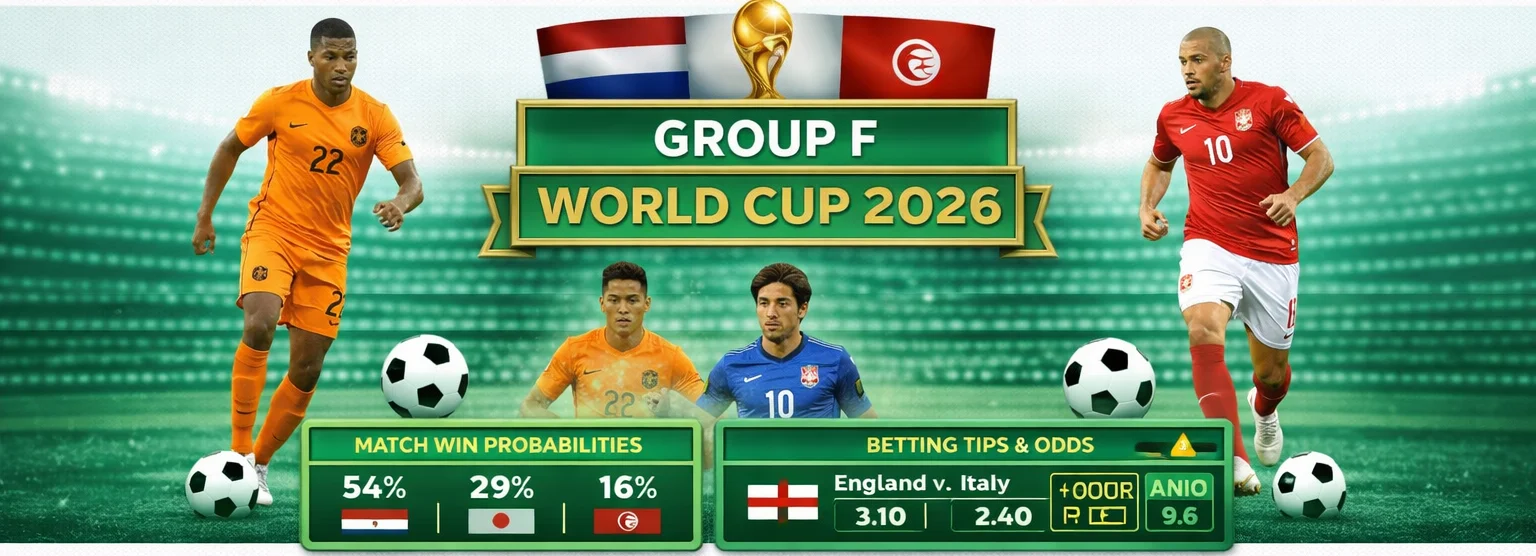
The FIFA World Cup 2026 brings an expanded format and a broader stage for international football, and Group F stands out as one of the more tactically diverse sections of the tournament. This page focuses on World Cup group F predictions, offering a structured look at the teams, fixtures, and key factors that shape betting decisions.
Predictions and betting tips for each match are based on a combination of statistical indicators and contextual analysis. These include head-to-head records, recent match results, current team form, home and away performance, and bookmaker odds. While this information helps refine a betting approach, it should be treated as guidance rather than a substitute for independent judgment.
Group F Teams and Tournament Context
Group F of the FIFA World Cup 2026 includes the following teams: Netherlands, Japan, Tunisia and Winner Playoff Path B. The group stage matches are scheduled to take place in North America, with games hosted across venues in the United States and Canada. Fixtures are expected to be played between mid-June and late June 2026, with kick-off times distributed to accommodate global audiences.
The Netherlands enter the competition as a structured and possession-oriented team, often relying on tactical discipline and depth in midfield. Japan, by contrast, emphasize quick transitions and technical precision, making them a difficult opponent in open play. Tunisia bring physical strength and defensive organization, typically focusing on compact play and counterattacks. The Winner of Playoff Path B remains to be determined, but such teams often arrive with strong momentum, having already navigated high-pressure qualification matches.
Key Factors Behind Betting Predictions
When approaching FIFA World Cup group F predictions, several elements consistently influence the outcome of a match and should be considered before placing a bet:
- Recent performance in international competition
- Squad depth and injury status
- Historical head-to-head results
- Tactical matchups between teams
- Bookmakers’ odds and market movements
Each tip is formed by weighing these variables rather than relying on a single indicator. For example, a team with strong recent results may still struggle against an opponent with a favorable tactical setup. Similarly, odds can reflect market sentiment but do not always capture situational nuances.
Match Schedule and Betting Outlook
Group F fixtures will follow the standard round-robin format, where each team plays three matches. The top two teams in the standings will advance to the knockout stage, making every point critical in this phase of the competition.
From a betting perspective, early matches often carry uncertainty, especially when teams are still adapting to tournament conditions. As the group progresses, clearer patterns emerge in terms of form and strategy. This creates opportunities for more informed betting decisions, particularly when evaluating potential group winners or decisive final-round matches.
In summary, World Cup group F predictions require a balanced approach that combines statistical data with situational awareness. The FIFA World Cup remains unpredictable by nature, but structured analysis provides a practical foundation for anyone looking to engage with the competition through betting.